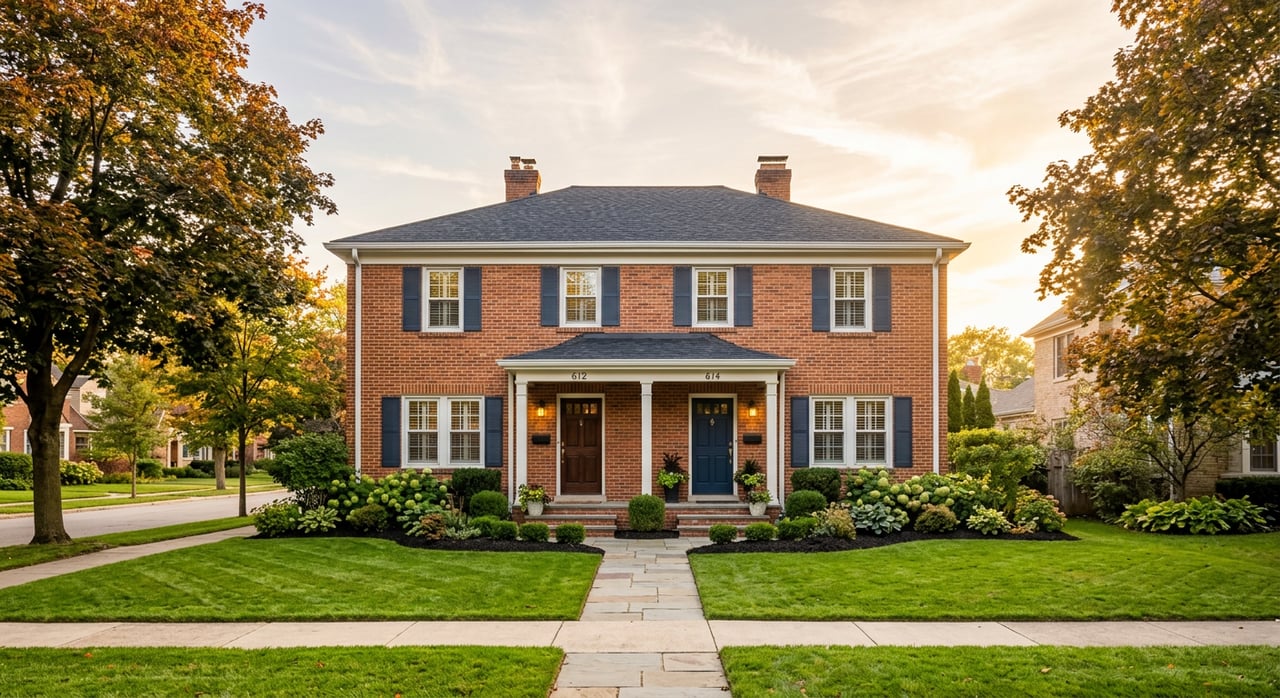
Thinking about buying a rental in Royal Oak? You’re not alone. Investors like you are drawn to the city’s active downtown, steady renter demand, and strong fundamentals. In this guide, you’ll get a clear, step-by-step framework to size up cash flow and risk, compare Royal Oak to nearby options, and understand key costs like taxes, licensing, and rehab. Let’s dive in.
Royal Oak market snapshot
Royal Oak’s estimated population is about 58,000 with a median owner-occupied housing value near $328,700, according to Census QuickFacts. Those basics help you frame purchase-price expectations and tenant demand at a city level. See the latest city profile on Census QuickFacts.
For rents, active-listing and apartment-index data can differ. A conservative city-level range of $1,500 to $1,900 per month captures the gap between single-family–heavy listing sources and apartment-focused indexes. For example, RentCafe’s Yardi Matrix sample shows an average around $1,538 for apartments, while listing sites that include single-family homes often skew higher. If you work with housing vouchers or program ceilings, use HUD’s published FMRs and SAFMRs for the Detroit–Warren metro as your benchmark. Explore the HUD FMR dataset.
How to underwrite a Royal Oak rental
Quick formulas to trust
- Gross Scheduled Rent (GSR) = monthly market rent × 12.
- Effective Gross Income (EGI) = GSR × (1 − vacancy rate).
- Operating Expenses = taxes + insurance + owner-paid utilities + maintenance + management + HOA + other recurring.
- Net Operating Income (NOI) = EGI − Operating Expenses.
- Cap Rate = NOI ÷ purchase price.
- Cash-on-Cash (CoC) = (NOI − Debt Service) ÷ cash invested.
Baseline assumptions for screening
Use these as starting points and verify locally for each property and unit type.
- Vacancy allowance: 5 to 7 percent is a reasonable conservative screen for a well-maintained single-family rental. Many investors plug in 6 percent for first pass.
- Property-management fee: about 8 percent of gross rent is a common single-family average. Leasing fees are typically separate.
- Maintenance and repairs: budget 5 to 10 percent of gross rent or use the “1 percent rule” as a quick screen. Treat it as a heuristic, not a final quote.
- Capital expenditures reserve: set aside a separate annual bucket for big-ticket items like roof, HVAC, and water heater. Many investors plan a few hundred dollars per unit per year, adjusted for age and condition.
- Property taxes: do not apply a flat city rate. Michigan taxes depend on taxable value and millage by parcel. Use the City of Royal Oak Tax Estimator or county parcel tools to model the bill.
- Insurance and utilities: request quotes from carriers and local providers. Factor any flood or risk elements you find in parcel records.
Example: 3-bedroom Royal Oak screen
Use a conservative midpoint rent of $2,200 per month for a renovated 3-bed based on the spread between apartment indexes and single-family listings.
- GSR = $2,200 × 12 = $26,400
- EGI (6 percent vacancy) = $26,400 × 0.94 = $24,816
- Operating Expenses (placeholders to fill): taxes + insurance + owner-paid utilities + maintenance (say 8 percent of GSR = $2,112) + management (8 percent of EGI = $1,985) + any HOA
- NOI = $24,816 − Operating Expenses
- Cap Rate = NOI ÷ purchase price
- CoC = (NOI − annual mortgage payments) ÷ total cash invested
Swap in actual tax estimates, insurance quotes, and utility policies to turn this into a property-specific pro forma. Then rerun the same workflow for your next target.
Find accurate Royal Oak rent comps
Use a consistent procedure so your rent number is defensible.
- Pull 3 to 6 active comps within 0.5 to 1 mile that match bedroom count, bath count, and amenities. Listing sites that capture single-family homes help here.
- Cross-check with an apartment index like RentCafe’s Royal Oak trends to see professionally managed averages.
- Validate with a second active-listing source to make sure you are not leaning on outliers. Tools that index active listings can help for spot checks.
- If you consider voucher tenants, reference HUD metro or ZIP-level benchmarks in the FMR/SAFMR dataset when modeling income ceilings.
Document the comps you used, the radius, and which percentile you selected. Many investors average the 50th to 75th percentile depending on condition and upgrade plan.
Rehab, timeline, and hidden costs
Scope and budget ranges
Investor projects often fall into three buckets. Always get written bids and include a 10 to 20 percent contingency for older housing stock. For general reference on scope, see cost guides like Fixr.
- Light refresh: about $10,000 to $30,000. Typical paint, flooring, minor repairs, fixture swaps.
- Moderate rehab: about $30,000 to $75,000. Kitchen and bath updates, selective systems work, window or siding sections.
- Full gut or major systems: about $75,000 to $200,000+. Structural, full mechanicals, layout changes.
Common surprise items
- Roof, HVAC, electrical, and plumbing often drive overages if deferred. Check ages, service records, and visible condition.
- Pull permit histories before you close. Confirm that prior work was inspected and signed off.
- Build a CapEx plan that schedules big-ticket replacements by expected remaining life.
Permits, inspections, and rental timing
- Royal Oak requires rental registration and inspections, including sworn attestations for safety devices and local contact information, with fees and penalties for violations. Registrations can be suspended or revoked for noncompliance. Review the city code for details at Royal Oak’s rental code.
- If you compare opportunities in Detroit, know that a Certificate of Compliance and lead-related steps often apply, which adds time and cost to reach rent-ready status. See the Detroit BSEED rental compliance page.
Royal Oak vs Berkley vs Detroit
Rents and sampling differences
Apartment-index data from Yardi Matrix shows average asking rents of about $1,538 in Royal Oak and about $1,316 in Detroit. See Royal Oak’s RentCafe page and Detroit’s RentCafe page. Some listing services report higher averages in Berkley and in Royal Oak because they include single-family homes and renovated small multis, which tend to command higher asking rents. The key is to match your comps to your unit type and finish level.
Demand drivers to note
- Royal Oak: downtown amenities and walkability attract steady interest in 1 to 3 bedroom homes and apartments. See regional lifestyle context in this ApartmentList guide to Michigan cities.
- Berkley: smaller footprint with a boutique downtown and a high owner-occupancy share by census measures. Review neutral city stats on Census QuickFacts for Berkley.
- Detroit: larger geographic spread with premium submarkets like downtown and midtown, and others with lower average rents and higher vacancy risk. Always analyze by neighborhood and property condition using the same underwriting steps above.
Investor takeaway: Royal Oak often pairs steady demand with solid rents, which can support house hacking and small-scale SFR or duplex plays. Yields still come down to your basis and scope, so run the numbers property by property.
Taxes, licensing, and due diligence
Use this quick checklist before you submit an offer.
- Confirm zoning and permitted unit count for the parcel with the planning department.
- Pull the property record in the county parcel viewer and record taxable value, SEV, and recent assessments.
- Run 6 to 8 rent comps within 0.5 to 1 mile, matched by bed/bath and condition. Average the 50th to 75th percentile depending on your renovation plan.
- Estimate property taxes with the City’s Tax Estimator and request insurance quotes before finalizing your pro forma.
- Check Royal Oak rental registration requirements and inspection timelines at the city code portal. For Berkley updates, track council materials like this rental ordinance packet.
Red flags to watch
- Unregistered rentals or properties with historic inspection failures that may trigger extended timelines or fines.
- Deferred major systems where repair costs approach or exceed conservative rehab budgets.
- Parcels split between school districts, which can change total millage and taxes.
How Tom Holzer Homes helps investors
You deserve clear numbers, local context, and a smooth path from tour to tenant. As a boutique Associate Broker with Metro Detroit reach, Tom provides investor-focused services that include on-the-ground rent comps, introductions to property managers and contractors, and a transaction plan that keeps your underwriting front and center. If you are weighing Royal Oak against nearby options, we’ll walk you through cap rate, CoC, rehab scope, and licensing timelines so you can act with confidence.
Ready to evaluate a property or build a buy box for Royal Oak and surrounding suburbs? Book a consultation with Tom Holzer Homes.
FAQs
What are typical Royal Oak rents today?
- City-level averages range roughly $1,500 to $1,900 depending on unit type and data source, with apartment indexes like RentCafe showing lower averages than single-family heavy listing snapshots.
How do I estimate property taxes for a Royal Oak rental?
- Use the City’s Tax Estimator to model taxes from taxable value and total millage. Avoid using a flat rate across properties.
Does Royal Oak require rental registration for single-family homes?
- Yes. The city requires rental registration, inspections, and sworn attestations, with fees and penalties for violations. Review the Royal Oak rental code before you underwrite.
What vacancy rate should I use when underwriting?
- For a well-maintained SFR, many investors screen with 5 to 7 percent vacancy, commonly 6 percent, and then adjust based on comps, location, and condition.
How do Royal Oak rents compare with Detroit and Berkley?
- Yardi Matrix shows averages around $1,538 in Royal Oak and $1,316 in Detroit. Some listing services report higher asking rents in Berkley and Royal Oak due to more single-family and renovated inventory. Always match comps to your unit type and finish level.