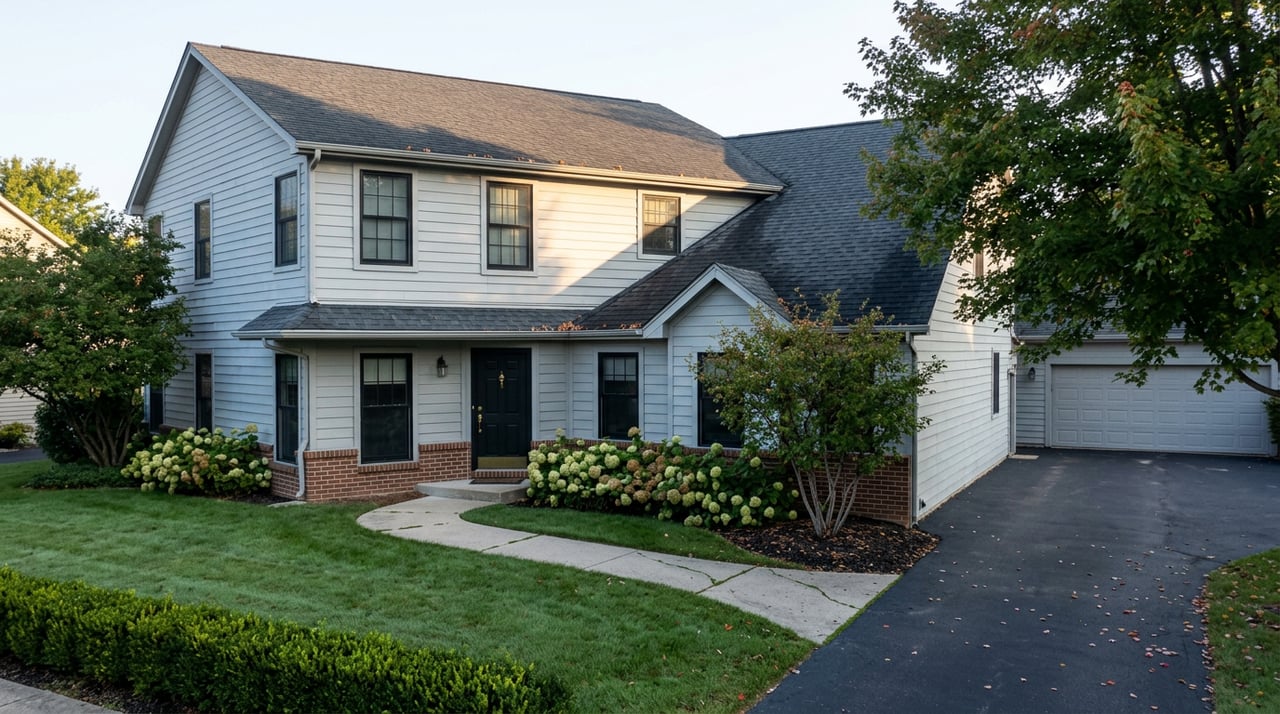
A buyer touring a brick ranch on Beverly Road will hear the same sentence from almost every agent who shows it: this house is zoned for Birmingham schools. Then, a few weeks later at closing, that same buyer opens a tax bill from a place called Southfield Township and wonders if someone made a mistake. Nobody did. The house sits inside the Village of Beverly Hills, a separate municipality from the City of Birmingham, and the paperwork reflects that even though the school assignment does not change at all.
That gap between what the school district promises and what the address implies is where most of the confusion about Beverly Hills starts. It is also where the actual math gets interesting, because once you line up the schools, the tax rates, and the current prices side by side, the story is not the one most buyers assume walking in.
The Boundary Nobody Drew on a School Map
Beverly Hills is governed by Southfield Township, not the City of Birmingham. It has its own village government, its own tax bills, and its own zoning. What it does not have is its own school district. Every child in Beverly Hills attends Birmingham Public Schools, the same district that serves the city itself, feeding into Beverly Elementary School, Greenfield Elementary School, Berkshire Middle School, and Groves High School.
That arrangement is not a workaround or a grandfathered exception. School district boundaries in Michigan are drawn independently of city and township lines, and in this stretch of Oakland County, Birmingham's district simply extends past its own municipal border into Beverly Hills. A family buying on the Beverly Hills side of that line gets the identical building assignments a family gets buying inside the city of Birmingham proper. The classroom does not know which government sent the tax bill.
Two Tax Bills, One Slightly Higher Rate
Here is where the assumption most buyers carry into this comparison starts to break down. The instinct is that Beverly Hills must be the tradeoff option: same schools, presumably lower taxes, presumably a discount for living outside the city limits. The City of Birmingham's own treasurer's office publishes a comparison table that says otherwise. Birmingham's local tax rate is 13.1041 mills. Beverly Hills' local rate, listed on that same city page, runs slightly higher at 13.6064. For context, Berkley sits at 17.2385 and Royal Oak at 18.7231, so Beverly Hills is still on the low end regionally, but it is not lower than Birmingham itself.
There is a real logistical difference, though it is not the one buyers expect. Beverly Hills residents receive two separate tax bills each cycle, one from the Village and one from Southfield Township, which handles the county, school, and township portions. Birmingham residents get one bill from the city that rolls everything together. The township's own piece of that bill is small, just 0.60 mills, but the two-bill structure catches first-time Beverly Hills buyers off guard often enough that it is worth knowing before you are staring at a mailbox in October wondering why there are two envelopes instead of one.
The upshot: nothing in the tax structure explains a meaningful price gap between the two municipalities. If Beverly Hills homes cost less, taxes are not why.
What "Typical" Actually Costs on Each Side of the Line
So what does explain it, and how big is the gap right now?
Zillow's home value index, which estimates the typical home across the full mix of housing in a given area, puts Beverly Hills at $601,961 as of the update on August 31, 2026, up 7.4% over the past year. Run that same index on Birmingham and the number lands at $607,910, essentially the same figure. On that measure alone, the two towns look nearly identical, which on its own should surprise anyone who has always treated a Birmingham address as the pricier tier.
The story changes once you look at what is actually closing rather than what the broader housing stock is estimated to be worth. Over the three months ending May 2026, homes that sold in Birmingham carried a median price of $818,000, up 12.8% from the same period a year earlier. That is a real, transacted number, not an estimate, and it sits more than $200,000 above Beverly Hills' current typical-value figure. Meanwhile Birmingham's own typical-value index actually slipped 0.7% over the past year even as its sold prices climbed, a sign that the homes changing hands recently skew toward the larger, pricier end of the city's stock rather than reflecting the full range of what Birmingham homeowners actually own.
The typical home in each town is worth roughly the same amount. What is currently selling in Birmingham is not typical.
That distinction matters for anyone using online estimates to decide where to shop. A buyer who only checks a home-value index will conclude Beverly Hills and Birmingham are priced almost the same. A buyer who checks recent closed sales will conclude Birmingham costs substantially more. Both are working from real numbers. They are just measuring different things, and only one of them tells you what you will likely need to bid to win a house in Birmingham today.
What the Extra Money Buys You in Birmingham, and What It Doesn't
Once the schools and the tax rates are equal, the premium buyers pay for a Birmingham mailing address over a Beverly Hills one is a premium for the city itself: the walk to downtown, the density of shops and restaurants within a few blocks, and the smaller lot sizes that come with in-town living. It is not a premium for better classrooms, since the classrooms are the same building either way, and it is not a discount for worse municipal services in Beverly Hills, since the local tax rate there runs slightly higher, not lower.
For a buyer whose priority is the school assignment itself rather than a downtown walk, that reframes the decision. Beverly Hills offers the identical Birmingham Public Schools enrollment on larger, more suburban lots, at a price point that recent sold data suggests can run well below what the same school assignment costs inside the city line.
The Pockets Inside Beverly Hills
Beverly Hills is not one uniform price band any more than Birmingham is, and buyers comparing the two should know the internal geography as well as the external one.
- East Beverly and West Beverly are the village's classic ranch-and-colonial streets, generally the most straightforward starting point for buyers coming from a Birmingham search.
- Nottingham Forest trades on larger lots and colonial-style homes, often on cul-de-sacs backing to wooded areas.
- Georgetown is another named enclave inside the village with its own consistent housing stock, frequently referenced in listings as a distinct pocket rather than just a street name.
- Beverly Manor is the village's condo cluster, offering an entry point for buyers who want the Birmingham school assignment without single-family maintenance.
The village's own amenities give Beverly Hills an identity apart from being "the place next to Birmingham." Beverly Hills Grill has served the community since 1988, and residents have two dedicated green spaces in Beverly Hills Village Park and Riverside Park, both used for everyday recreation rather than as a substitute for Birmingham's downtown.
What This Means If You're Comparing the Two
- Confirm the school assignment directly with Birmingham Public Schools before assuming an address determines it. Village and township lines do not always match district lines.
- Do not rely on a single online price estimate to judge the gap between the two towns. A typical-value index and a recent-sold median can tell very different stories about the same market.
- Budget for two separate tax bills if you buy in Beverly Hills, one from the Village and one from Southfield Township, rather than the single combined bill Birmingham issues.
- If downtown walkability is not the priority, treat Beverly Hills as a way to access the same school district on larger lots, not as a compromise.
FAQ
Is Beverly Hills, Michigan part of the City of Birmingham?
No. Beverly Hills is a separate village governed by Southfield Township. It shares a school district with Birmingham but has its own municipal government and tax structure.
Will my children attend Birmingham schools if I buy in Beverly Hills?
Homes throughout Beverly Hills fall within the Birmingham Public Schools attendance area, feeding into Beverly Elementary, Greenfield Elementary, Berkshire Middle School, and Groves High School. Always confirm current boundaries directly with the district before writing an offer, since assignments can be adjusted over time.
Are property taxes lower in Beverly Hills than in Birmingham?
Not based on the local rate. Birmingham's own comparison places its local tax rate at 13.1041 mills against 13.6064 in Beverly Hills. Beverly Hills residents also receive a separate bill from Southfield Township in addition to the Village's own bill.
If you are weighing a Birmingham address against a Beverly Hills one and want the current sold data for the specific streets and school assignments you are considering, Tom Holzer can walk through what the numbers mean for your search and help you book a consultation before you write an offer.